
Construction is temporary. The impression it leaves on customers, employees, visitors, and tenants may not be.
Plastic sheeting, exposed framing, taped-off areas, and improvised barriers may technically separate a work zone, but they can also make an occupied building feel unfinished, disorganized, or even neglected. That matters more in customer-facing and public environments where the rest of the facility is still expected to look professional.
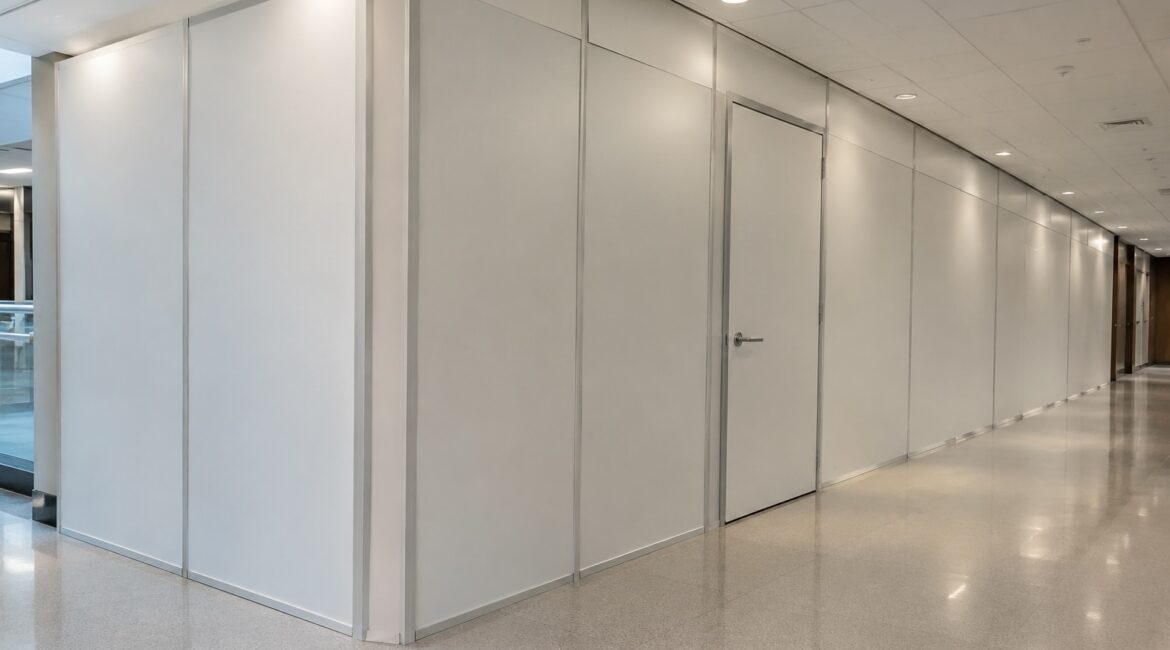
Edge Guard temporary wall systems help solve that problem by creating a clean, finished barrier that looks more like part of the building than a temporary construction setup. Edge Guard specifically describes its systems as having a professional true-wall appearance, with modular panels designed for commercial renovation environments.
Temporary Does Not Have to Look Improvised
Temporary construction often happens in places that cannot simply close until the work is finished.
Think about:
- Hotel lobbies
- Retail stores
- Office buildings
- Airports
- Schools
- Community centers
- Healthcare facilities
- Government buildings
People may still be walking through hallways, checking in, shopping, attending appointments, or working only a few feet away from the project.
In those environments, the construction barrier becomes part of what people see.
A loose plastic curtain or plywood wall can make the entire area feel like a job site. A smooth, solid temporary wall creates a very different impression.
Appearance Affects the Rest of the Building
A renovation may only occupy one section of a facility, but visually it can dominate the space if the barrier looks unfinished.
That can create problems even when the construction itself is well managed.
Visitors may wonder whether the area is safe to enter. Customers may assume the disruption is larger than it actually is. Employees may feel like they are working inside an active construction zone even when their area is completely separate.
A cleaner temporary barrier helps make the boundaries obvious.
The message becomes simple: work is happening over there, while normal business continues here.
That distinction is especially important in places where appearance is closely tied to customer experience.
A Better Fit for Customer-Facing Spaces
Edge Guard temporary construction walls are designed to provide a clean, modern appearance rather than looking like an improvised divider. The panels are reusable, modular, and available in configurations that can include doors and other accessories.
That makes them useful in locations where contractors need both containment and presentation.
For example, a hotel may be renovating rooms near an occupied hallway. A retail store may be remodeling one section while the rest remains open. An office building may be replacing flooring or mechanical systems near a busy lobby.
In each case, the construction zone still needs to be separated. But there is no reason the barrier itself has to make the rest of the building look unfinished.
Professional Appearance Is Part of Containment
Containment is usually discussed in terms of dust, debris, access, and safety.
Those things are important.
But in occupied buildings, there is another issue: visual containment.
Keeping construction activity out of direct view can help the rest of the facility continue to feel organized and functional. Tools, materials, unfinished surfaces, and active work remain behind the barrier instead of becoming part of the public environment.
That does not make the construction disappear. It simply keeps the project from visually taking over the building.
Temporary Should Describe the Duration, Not the Quality
Temporary construction walls are supposed to be removed when the project is finished.
That does not mean they need to look temporary while they are in place.
Edge Guard temporary wall systems provide a cleaner way to separate construction from occupied areas while maintaining a professional appearance throughout the project. For facilities that need to keep operating, looking organized can be almost as important as staying organized.
